
The GenAI Gold Rush: Are You Striking Gold or Fool's Gold?
Let's be completely honest for a moment. You've spent money on Generative AI. You went through the pitch decks, signed the contracts, and maybe even hired a full-time AI team. But when someone asks you what the return on that investment looks like, you hesitate.
Does this sound like you? You're not the only one. Executives in boardrooms from New York to Singapore are dealing with the same uncomfortable truth: GenAI promised to be a revolution, but for many businesses, it feels more like an expensive science experiment. There was a lot of hype. The truth? A little less clear.

It's like getting a fast sports car but never learning how to drive it. The machine has the power, but if you don't have the right skills, the right road, and the right destination, you won't get there quickly. That's where most GenAI investments are stuck right now.
The Real Numbers Behind GenAI ROI
Let's take a good look at the problem before we try to fix it. Studies and surveys of the industry show that a lot of GenAI projects either stop working during the pilot phase or don't grow into something that has real business value. We're talking about companies spending hundreds of thousands to millions of dollars and getting only small increases in productivity at best.
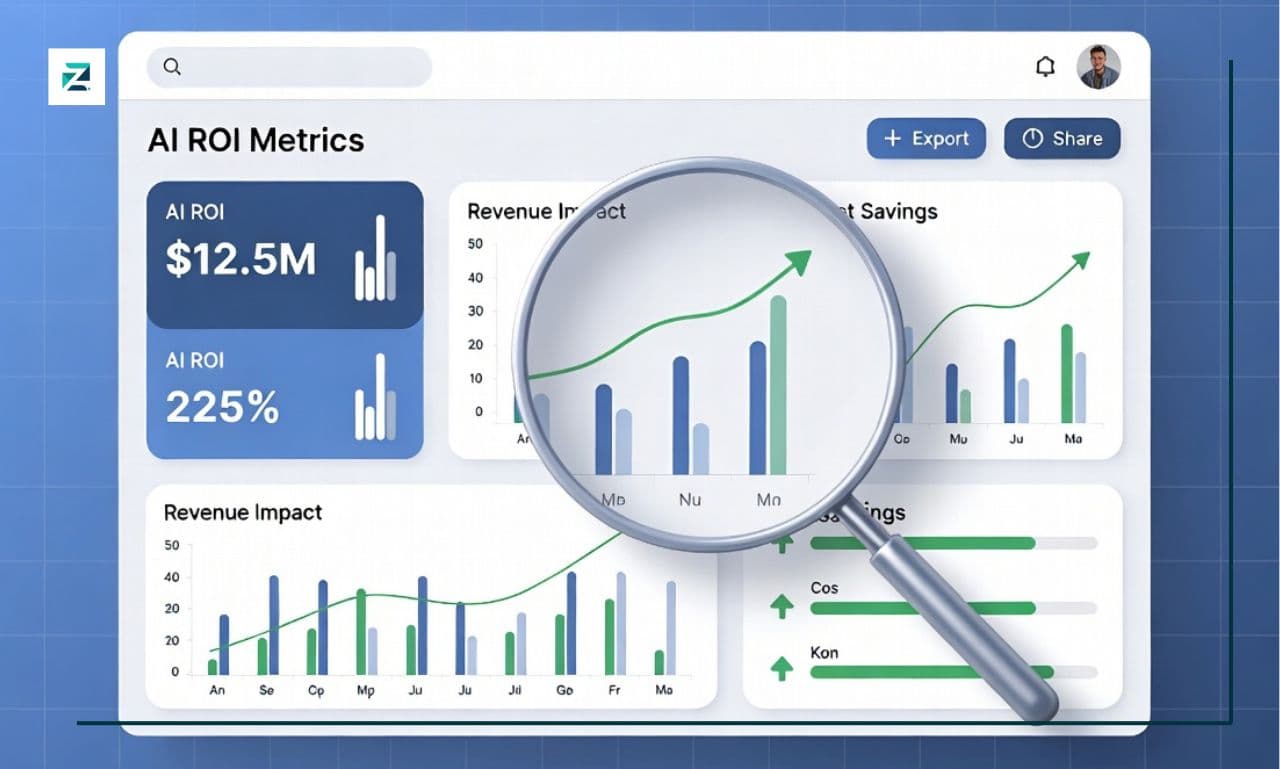
What causes this to happen? Companies are measuring the wrong things, trying to fix the wrong problems, or, even worse, not measuring anything at all. They use a chatbot and call it an AI transformation, but they don't see any change in their bottom line. That's not a problem with AI. That's a problem with strategy that looks like AI.
There are certain things that businesses seeing results do that set them apart from the rest. And the good news is that you can learn these habits. Let's take them apart.
Why Most GenAI Projects Fail Before They Begin
This is the hard truth: Most GenAI investments are doomed to fail from the first planning meeting. It's not a failure of technology. It's a failure to be ready. Let's look at the four things that happen most often.
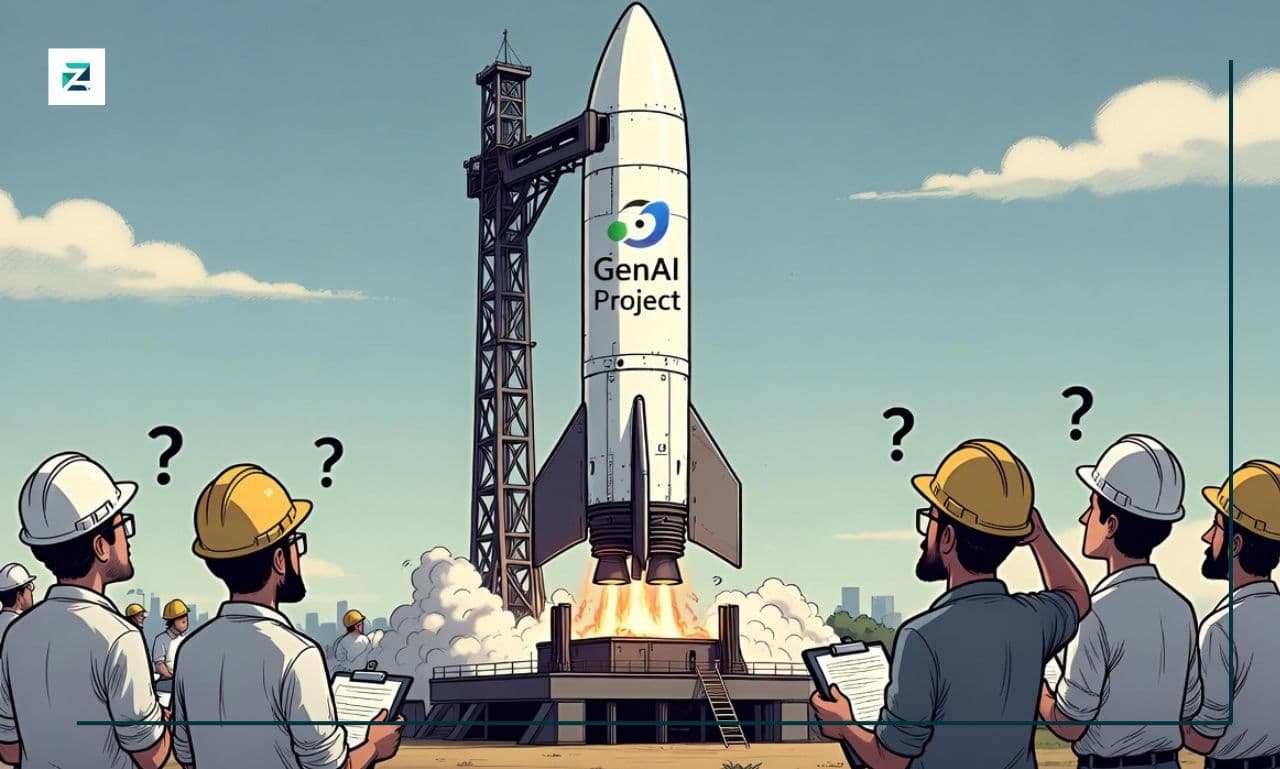
Error #1: There Isn't a Clear Business Issue to Address
This is the major one. When businesses are enthusiastic about AI, they begin to question, "Where can we use AI?" instead of, "What specific problem do we need to solve?" These are fundamentally different questions with completely different answers.
Imagine asking a top-tier surgeon to "do something medical." Even the best instruments are useless without a diagnosis. The same applies to GenAI. You're merely playing with expensive toys if you can't describe a clear, quantifiable business problem, such as cutting content production time in half, boosting contract review accuracy, or lowering customer service costs by thirty percent.
Error #2: Underestimating Data Preparedness
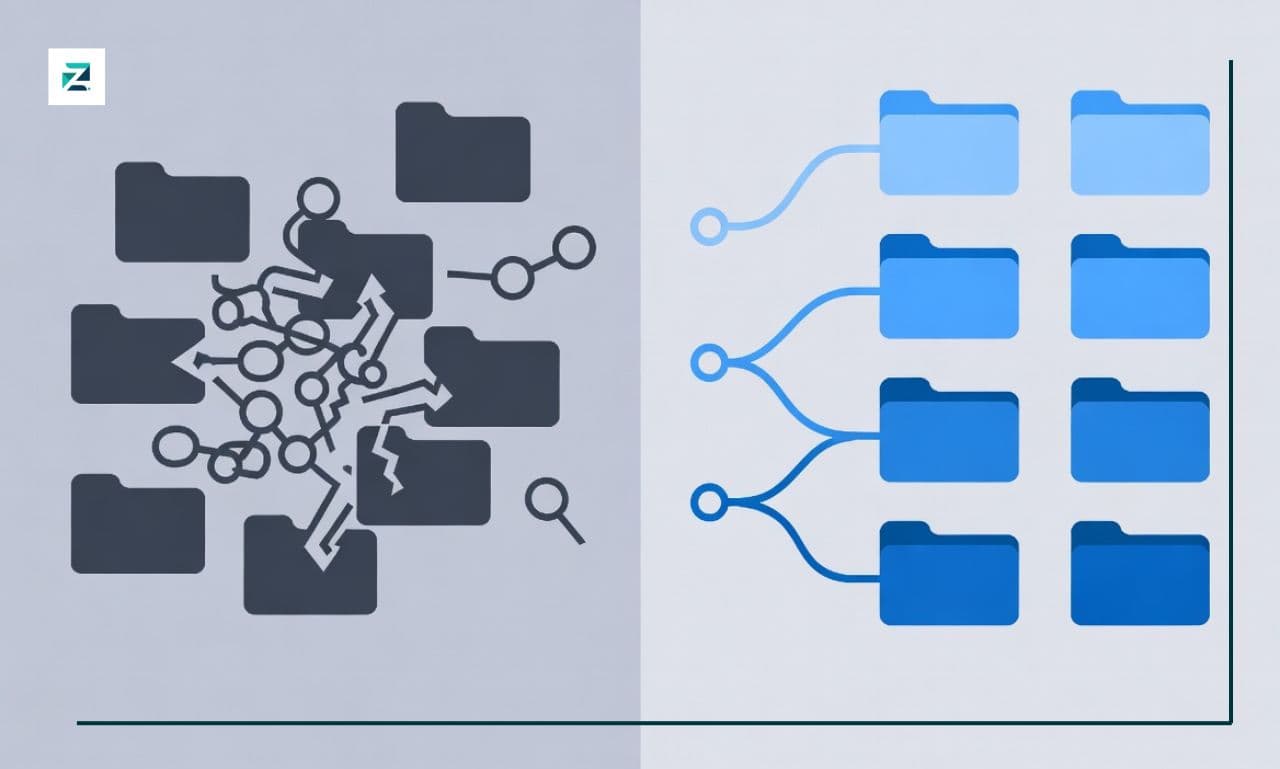
The quality of GenAI depends on the data it is fed. Your AI outputs will be chaotic if your data is fragmented, inconsistent, out-of-date, or lacking. The adage "garbage in, garbage out" is cliched because it is unavoidably accurate.
Many companies don't perform a complete data audit before implementing GenAI solutions. They find that their databases don't communicate with one another, their internal records are disorganized, or their historical data is plagued with holes, usually after wasting months. Although it's not very attractive, data infrastructure is the basis for everything else.
Error #3: Neglecting Change Management

This is something that is rarely mentioned in AI vendor brochures: your GenAI venture may fail more quickly due to employee resistance to change than technological issues. People are afraid. They rely on the well-known tools they've been using for years, worry about their job security, and distrust outcomes they don't comprehend.
Your GenAI tools will remain mostly unused or underutilized in the absence of a strong change management strategy that includes training, communication, and sincere leadership buy-in. Adoption of technology is not a given. It is acquired by education and trust.
Error #4: Considering GenAI as a One-Time Purchase
Purchasing a GenAI platform is not the same as purchasing furniture. Continuous tuning, monitoring, updating, and iteration are necessary for these systems. Models exhibit drift. Business requirements change over time. There are new use cases. Businesses that approach GenAI as a "deploy and forget" investment risk becoming stagnant.
Consider it more akin to gardening. After planting the seeds, you water, trim, fertilize, and make adjustments based on what grows and what doesn't. Maintaining and iterating is an ongoing investment that is essential to the game.
The Strategy Gap: Why Vision Without Execution Is Worthless
There is someone at every company who can inspire others with a talk about AI's future. Someone who can translate that vision into a tangible, methodical execution plan linked to actual business objectives is much rarer and more valuable.
The strategy gap is the difference between "We're going to transform with AI" versus "Here are the 12 specific workflows we're automating over the next 18 months, with owners, timelines, and success metrics attached to each." Too many organizations never make it to the second assertion because they reside in the first. What about that gap? They pay a heavy price for it.
A strategy is only a dream if it is not carried out. Without strategy, an execution plan is merely busy work. You need both, cooperating under the direction of someone with the power and responsibility to make choices and change course when things go awry.
How to Audit Your Current GenAI Investment
You must diagnose the issue before you can solve it. Consider this as a thorough evaluation of your GenAI plan. Here's a basic structure to get you going:
Step 1: Map Your Present Use Cases. List all of the GenAI programs and tools you are using at the moment. Who makes use of it? How frequently? What is the difference between the intended and actual results?
Step 2: Calculate Real Usage. The number of tools that are installed and remain essentially unused after the second week is astounding. Obtain usage data. Find out why adoption is so low. Is there a UX issue? An issue with trust? An issue with training?
Step 3: Quantify Business Impact. Determine the true benefits of each active use case. Saved time? Income produced? Decreased error rates? You have an urgent measurement issue if you are unable to put a number on it.
Step 4: Determine the Gaps. Where are the differences between what you're receiving and what you anticipated? Although painful, gap analysis is crucial. Your road map for what needs to change is these gaps.
Building a GenAI Roadmap That Actually Works
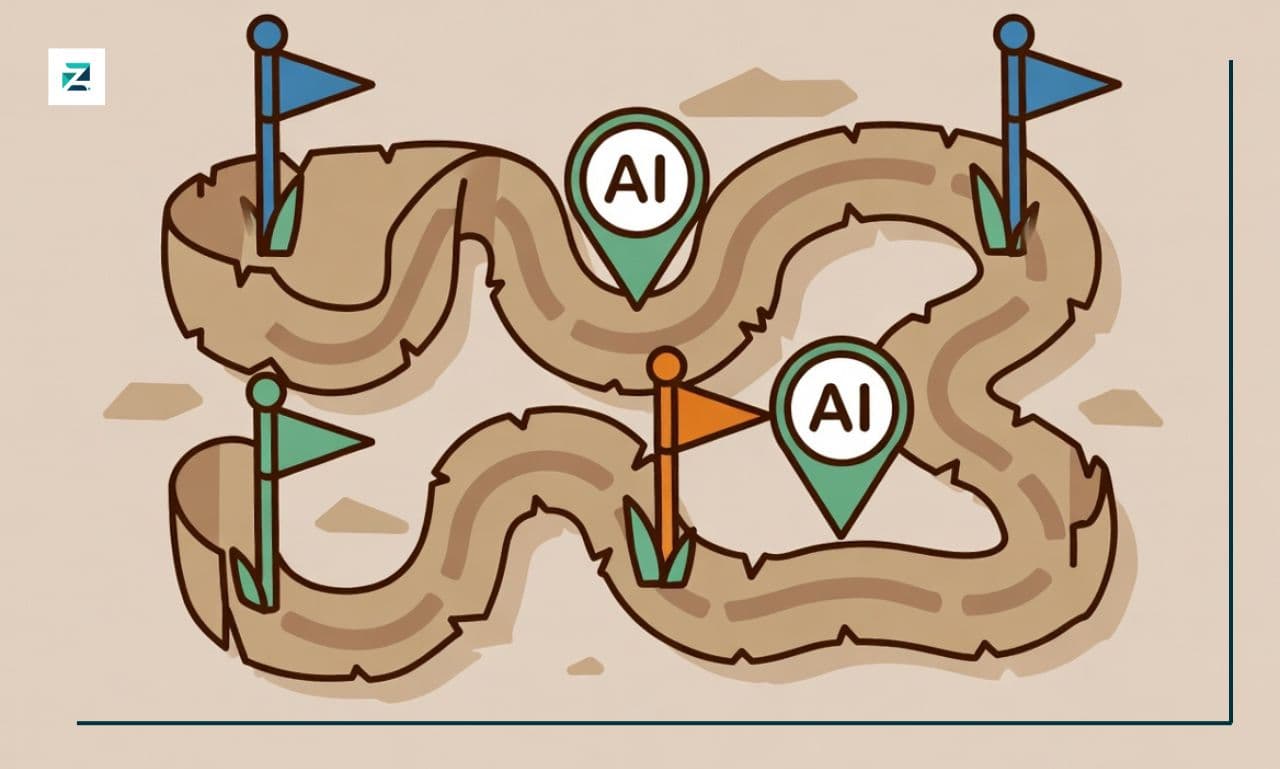
You can create a practical road map to your desired destination if you are aware of where you are. Furthermore, this roadmap must be based on business value rather than technical coolness or conference impressions.
Start Small, Win Big: The Pilot-First Approach
Rarely do the greatest GenAI success stories start with company-wide rollouts. Prior to growing, they start with carefully chosen pilot projects: contained, quantifiable, low-risk tests that demonstrate value. Select one or two use cases with clear success measures, motivated users, and clean data. Get those right. Then enlarge.
This strategy produces proof points for hesitant stakeholders, increases internal confidence, and produces a repeatable playbook for next deployments. It's not about having a small mind. Prior to going large, it's important to win strategically.
Align GenAI Goals With Business KPIs
Each GenAI project must be directly linked to a business KPI that is already important to the leadership. Customer satisfaction ratings, revenue per employee, time-to-market for new goods, or operational cost ratios are true indicators of business health rather than vanity metrics like "number of AI tools deployed."
Everyone, from the CFO to the front-line manager, has an incentive to pay attention when your AI objectives are discussed alongside your business objectives. Alignment is more than just a smart tactic. For your AI software, it's survival.
People Over Platforms: Upskilling Your Workforce

Here's a mentality change that may virtually instantly improve your GenAI ROI: start investing in people instead of platforms. The world's most advanced AI tool is useless in the hands of someone who doesn't understand how to use it, doesn't trust it, or doesn't comprehend how it relates to their day-to-day work.
Your sales force does not need to become data scientists in order to upskill. It entails providing sufficient AI literacy to enable everyone, from CEOs to entry-level workers, to collaborate with these tools with assurance. Hands-on practice sessions, use-case demos, and timely engineering workshops can improve your ROI more than the next platform upgrade.
Develop internal AI champions: passionate early adopters who can support, educate, and debug their teams. Strategy is eaten for breakfast by culture, and an AI-curious culture will always perform better than a reluctant one.
Choosing the Right GenAI Tools for Your Business
Not every GenAI tool is made equally, and not every organization can benefit from every solution. Vendor promises can seem uncannily similar, and the market is overflowing with possibilities. How can you break through the clutter?
Instead of starting with the tool, start with your use case. Determine what you need it to do, then compare tools to that particular need. Request live demonstrations using your data rather than carefully selected vendor datasets. Speak with reference clients in your sector. Examine the integration needs carefully. Will this tool become another isolated island or will it work well with your current tech stack?
Additionally, take into account the entire cost of ownership rather than simply the licensing charge. Your original investment estimate may easily double or triple due to implementation, customization, training, maintenance, and continuing support expenses. Enter with your eyes wide open.
Measuring What Matters: GenAI Metrics That Move the Needle
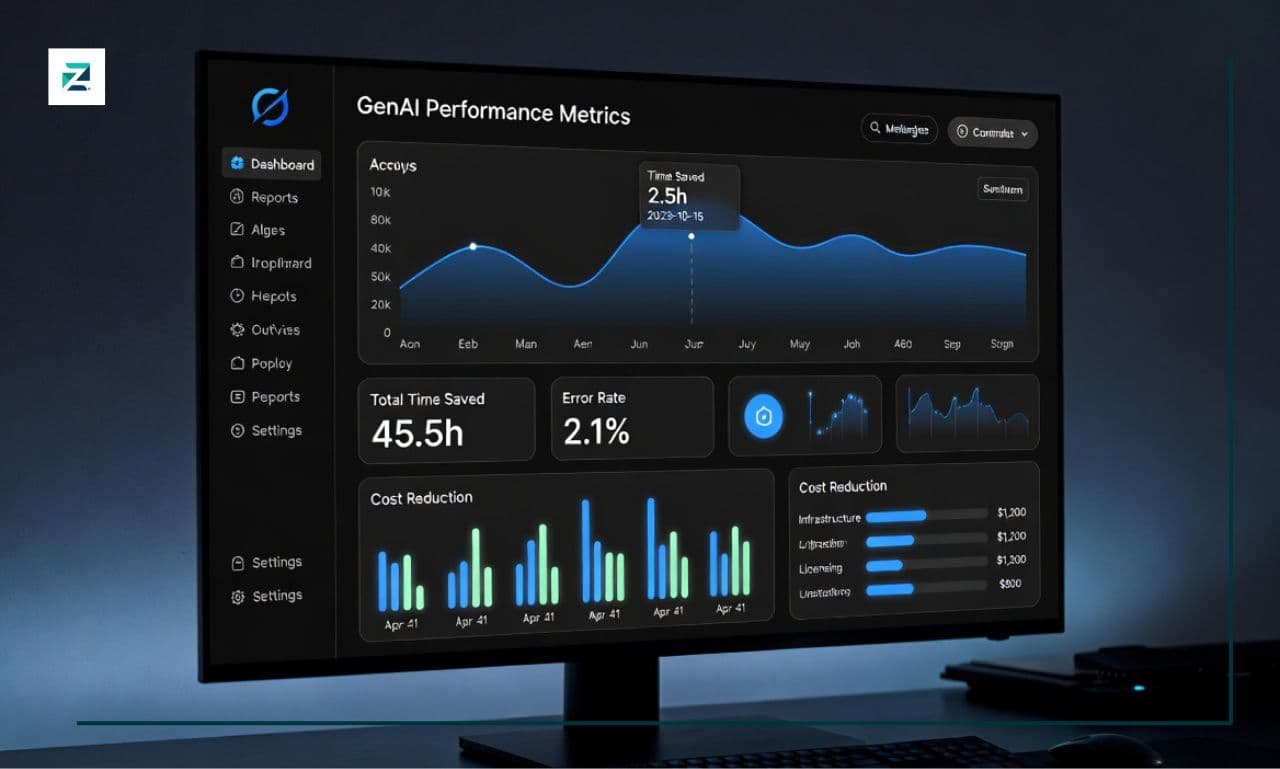
You are measuring the incorrect things if you are counting the number of prompts submitted or the number of AI tools licensed. The measurements that are connected to actual business results are the ones that are important.
Useful GenAI indicators include: time saved per job (and what workers do with that time), error rates before and after AI support, the impact on customer satisfaction, cycle time savings in critical workflows, and revenue or cost implications.
Create a dashboard that your CFO would find useful. For continuous measurement, that is your north star. Make proactive decisions about where to double down, where to pivot, and where to pull back by reviewing these metrics on a regular basis, at least once a month. The dangers of static measurement are equal to those of no measuring at all.
Real-World Turnaround Stories
Businesses who have recovered from failing GenAI investments have a common trend across industries. They gave up pursuing technology for its own sake.
For instance, a mid-sized insurance company made significant investments in a generative AI tool for summarizing policy documents, but uptake was almost nonexistent. When they met with the real underwriters, learned about their genuine workflow problems, retrained the model using domain-specific language, and conducted a 30-day structured pilot with direct feedback loops, the situation changed dramatically. Adoption skyrocketed in less than a quarter, and review times were almost halved.
Similar experiences with AI-generated product descriptions were reported by a retail company. The initial products were off-brand and generic. Rather than abandoning the initiative, they made investments in improved prompt mechanisms, more stringent brand requirements that were fed into the system, and a human tone quality assessment stage. As a consequence, their content team saved dozens of hours every week while producing scalable material that preserved brand voice.
Diagnosis, focus, iteration, and human-AI cooperation are all recurring themes.
The Future of GenAI ROI: What's Coming Next

The field of GenAI is developing at a rate that will make your head spin. Future developments include enhanced reasoning models, closer interaction with enterprise software, multimodal capabilities, and agentic AI systems that can carry out multi-step tasks independently.
Businesses who have already established solid GenAI foundations: clean data, coordinated strategy, and upskilled teams, will be in a better position to benefit from these developments more quickly than rivals who are rushing to catch up.
The crucial realization is that businesses with the largest AI spending aren't always the ones that will succeed in the upcoming wave. They possess the strongest AI discipline: the capacity to assess, apply, refine, and measure consistently and rigorously. The choices you make regarding your present investment are where this discipline begins now.
Conclusion
GenAI was never intended to be a magic wand, and it is not one. It's a potent set of tools that, like any tool, works just as well as the plan, expertise, and goal behind it. Purchasing a new product is rarely necessary if your GenAI investment isn't yielding results. It calls for more deliberate execution, more honest measurement, and clearer reasoning.
Instead of focusing on the platform, start with the issue. Make the same investments in your people as you do in your technology. Create your plan based on business KPIs that are truly important. Run pilots, pick things up quickly, and grow what works. The companies who are doing this correctly are simply disciplined; they are not unicorns. And discipline is entirely accessible to everyone, in contrast to genius.
FAQs
1. How long does it typically take to see ROI from a GenAI investment?
Well-designed pilot programs can provide quantifiable outcomes in as little as 60 to 90 days, while this greatly relies on the use case and execution quality. It usually takes 12 to 24 months for enterprise-wide reforms to demonstrate significant ROI at scale.
2. What's the most common reason GenAI projects fail?
The lack of a well-defined business problem is the most frequent cause. Businesses use GenAI tools without a clear objective in mind, which makes it hard to gauge progress or produce significant results.
3. Do we need a dedicated AI team to make GenAI work?
Not always. While having AI specialists on staff is helpful, many businesses are able to successfully use GenAI by upskilling current staff members and collaborating with seasoned implementation partners. Clear ownership and responsibility are more important than headcount.
4. How do we know if our data is ready for GenAI?
Prior to implementing GenAI, do a data audit. Keep an eye out for problems such as incomplete records, inconsistent formatting, data silos, and a lack of governance policies. Everything else depends on clean, organized, and easily accessible data, so take care of that first.
5. Should we build our own GenAI models or use existing platforms?
Building from scratch is significantly more expensive for the great majority of enterprises than utilizing pre-existing platforms and optimizing them for particular use cases. Only very large enterprises with extremely particular needs can afford the substantial data, personnel, and infrastructure investment required for custom model development.